9.8.26
The End of Waiting at Work
Read
.svg)
.svg)
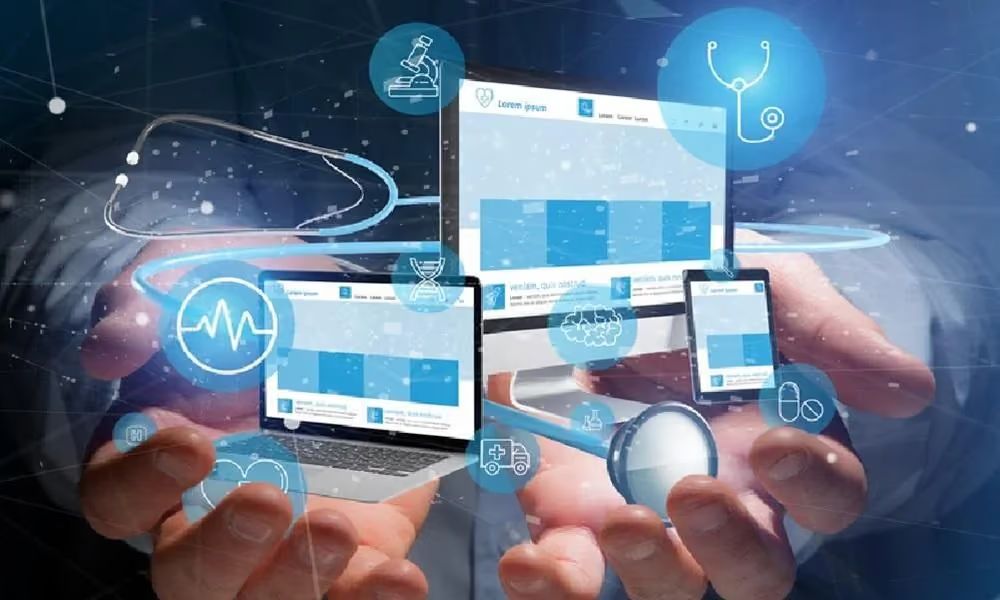
Marketing medical products requires precision, culturalsensitivity, and regulatory compliance. When translating medical marketingmaterials, it's crucial to maintain the integrity and accuracy of theinformation while making it relatable and understandable for the targetaudience. Here are some essential dos and don’ts to consider when translatingthese materials.
1. Do Ensure Accuracy and Clarity: Accuracy is essentialin medical marketing translations. Ensure that all medical terms, dosages, andinstructions are translated correctly. Clarity should also be a priority toavoid any misinterpretation that could potentially harm patients or misleadhealthcare professionals.
2. Do Adapt to Local Regulations: Different countrieshave unique regulations regarding medical advertising. Ensure your translationscomply with the local laws and guidelines to avoid legal issues. This mayinvolve adapting or rephrasing certain content to meet regulatory requirements.
The U.S. Food and Drug Administration (FDA) is responsiblefor regulating medical devices, pharmaceuticals, and other health-relatedproducts in the United States. It sets stringent guidelines for marketingmaterials, ensuring that all information is accurate, not misleading, andcompliant with federal regulations. This includes the requirement fortranslations to maintain the same standards as the original content.
The European Medicines Agency (EMA) oversees the evaluation and supervision ofmedicinal products for human and veterinary use in the European Union. Itprovides guidelines on the quality and content of translated materials,ensuring that all translations are accurate and culturally appropriate. The EMArequires that translated marketing materials comply with the linguistic andregulatory standards of each EU member state.
3. Do Localize for Cultural Relevance: Localization goes beyond languagetranslation. It involves adapting the content to reflect the cultural nuances,beliefs, and values of the target audience. This ensures the marketingmaterials resonate with the local population and are more effective inconveying the intended message.
4. Do Use Professional Medical Translators: Utilizetranslators who specialize in medical terminology and have experience in thelife sciences sector. Professional medical translators are familiar with thespecific jargon and can provide translations that are both accurate andcontextually appropriate.
5. Do Conduct Thorough Quality Assurance: Implement arigorous quality assurance process that includes multiple reviews by differentexperts. This ensures that the translation is accurate, consistent, and free oferrors. Peer reviews and back-translations can be part of this process toverify the accuracy of the translation.
1. Don’t Rely Solely on Machine Translation: Whilemachine translation can be a useful tool for initial drafts, it should neverreplace human expertise. Medical marketing materials require a nuancedunderstanding that machines cannot provide. Relying solely on machinetranslation can lead to errors and misinterpretations.
2. Don’t Ignore Cultural Sensitivities: Failing toconsider cultural differences can result in marketing materials that areineffective or even offensive. Avoid using idiomatic expressions or culturallyspecific references that may not translate well into the target language.
3. Don’t Use Untrained Translators: Avoid usingtranslators who lack expertise in the medical field. Untrained translators maynot understand the specific terminology and could introduce errors thatcompromise the accuracy and effectiveness of the marketing materials.
4. Don’t Overlook Legal Implications: Ignoring thelegal aspects of medical marketing translations can lead to seriousconsequences. Ensure that your translations adhere to all relevant legal andregulatory requirements to avoid penalties and ensure compliance.
5. Don’t Neglect the Target Audience: Always considerthe target audience when translating medical marketing materials. Tailor thelanguage, tone, and style to match the preferences and expectations of thelocal population. Neglecting the target audience can result in materials thatfail to engage and inform effectively.
Importance of Partnering with an Experienced TranslationProvider
Partnering with an experienced translation provider likePowerling can make a significant difference in the quality and effectiveness ofyour medical marketing translations. Powerling brings a wealth of experienceand expertise to the table, ensuring that your materials are translatedaccurately and culturally appropriately. Our team of professional medicaltranslators is well-versed in the nuances of medical terminology and regulatoryrequirements, providing you with peace of mind and ensuring that your marketingmaterials meet the highest standards of quality and compliance. By choosingPowerling, you benefit from our rigorous quality assurance processes and theircommitment to delivering translations that resonate with your target audienceand support your marketing objectives.
Bottom Line
Translating medical marketing materials requires a carefulbalance of accuracy, cultural relevance, and regulatory compliance. Byfollowing these dos and don’ts and partnering with an experienced translationprovider like Powerling, you can ensure that your marketing materialseffectively communicate your message and achieve your business goals in theglobal market.
If your organization is investing heavily in content but lacks full visibility, alignment, or scalability, it is time for a structured assessment.


.svg)


.svg)

.svg)





.svg)