8.25.26
The Language Lake: The Foundation of Language Intelligence in the AI Era
Read
.svg)
.svg)
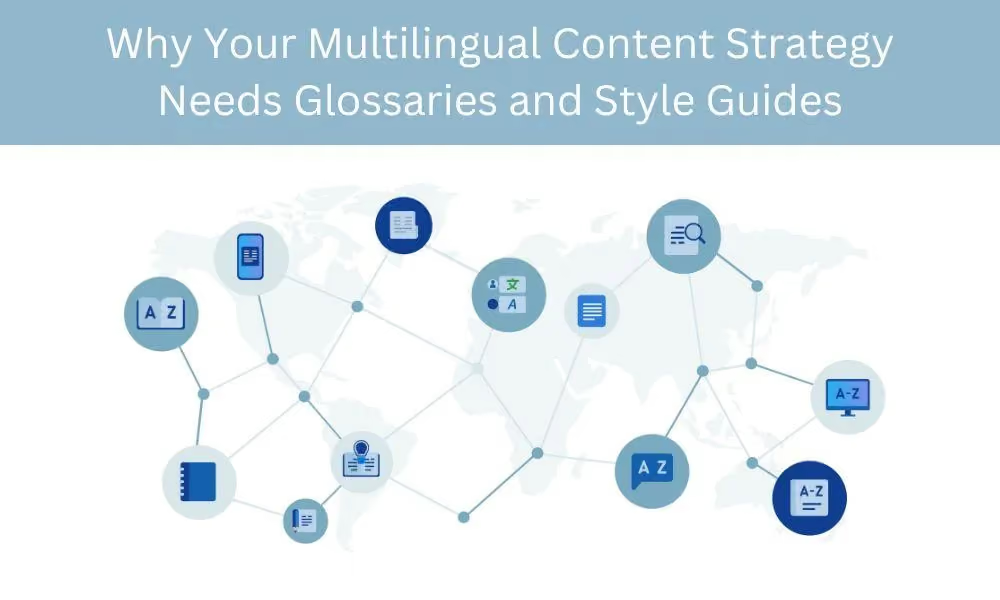
Businesses must communicate effectively across multiplelanguages and cultures in a global marketplace. Whether you're expanding intonew markets, localizing your website, or translating technical documentation,maintaining consistency in messaging and brand identity is critical. However,without a structured approach, multilingual content can quickly becomedisjointed, leading to confusion, misinterpretation, and even brand damage.
This is where glossaries and style guides come intoplay. These essential tools help ensure clarity, consistency, and efficiency intranslation and localization efforts. In this article, we’ll explore why theseresources are indispensable for your multilingual content strategy and how theycontribute to higher-quality translations.
A glossary is a curated list of key terms and phrasesrelevant to a company’s industry, products, and services, along with theirapproved translations. These terms might include brand-specific terminology,product names, technical jargon, and abbreviations.
Ensuring Consistency Across Languages
Imagine a global SaaS company launching its software in five new markets. Theterm "dashboard" could be translated as tableau de bord inFrench, tablero in Spanish, or 控制面板 in Chinese. Without aglossary, different translators may use different terms, causing inconsistencyin the user interface and customer support materials. A glossary ensures that"dashboard" is translated the same way every time.
Avoiding Mistranslations and Brand Damage
Some terms carry unique meanings in different cultures. For instance, in themedical field, the word "dose" in English might need precise handlingin translation to avoid dangerous misinterpretations. A glossary providescontext and correct usage, reducing the risk of errors that could have seriousconsequences.
Boosting Translator Efficiency and Reducing Costs
When translators have access to a well-defined glossary, they spend less timeresearching terms, resulting in faster turnaround times and lower translationcosts. It also minimizes the need for extensive revisions and quality assurancechecks.
The Importance of Style Guides in Translation
A style guide is a set of rules that define the tone,voice, and formatting preferences for translated content. It establishesguidelines on aspects like sentence structure, punctuation, capitalization, andcultural nuances.
Maintaining Brand Identity Across Markets
A luxury fashion brand may have a refined and sophisticated tone in English. Ifa translator adopts a casual or overly technical tone in another language, itcould misrepresent the brand. A style guide ensures that the brand'spersonality remains intact across all translations.
Enhancing Readability and User Experience
Different languages follow different writing conventions. A style guide canspecify whether numbers should be written numerically or spelled out, how datesshould be formatted (MM/DD/YYYY vs. DD/MM/YYYY), and whether touse formal or informal address (usted vs. tú in Spanish). Thesedetails contribute to a seamless experience for global audiences.
Streamlining Collaboration Between Teams
When multiple translators, editors, and localization managers work on aproject, a style guide ensures they are all aligned. It reduces inconsistenciesin voice and presentation, even when multiple vendors or freelancers areinvolved.
Let’s consider TechNova, a hypothetical technologycompany expanding its AI-powered customer support tool to European and Asianmarkets.
By implementing glossaries and style guides, TechNovasuccessfully launches in multiple markets without brand inconsistencies orcustomer confusion.
Collaborate with Translation Experts
Work with professional linguists and localization experts like those atPowerling to create glossaries and style guides tailored to your industry.
Leverage Translation Management Systems (TMS)
Many TMS platforms allow integration of glossaries and style guides, ensuringseamless application across all projects.
Regularly Update and Maintain These Resources
Language evolves, and so do business needs. Regularly review and updateglossaries and style guides to reflect new terminology, branding changes, andcustomer preferences.
Educate Your Team
Ensure that internal teams, including marketing, product development, andcustomer support, understand the importance of maintaining consistency inmultilingual content.
Expanding into global markets requires more than justtranslating words. It demands strategic consistency in messaging andbranding. Glossaries and style guides are not optional; they areessential tools for ensuring clear, accurate, and culturally appropriatetranslations.
By incorporating these resources into your multilingualcontent strategy, your company will improve efficiency, brand integrity, andcustomer trust worldwide.
Ready to optimize your multilingual content strategy?Powerling’s team of experts can help you create robust glossaries and styleguides tailored to your industry. Contact us today to ensure your brand speakswith one clear voice across all markets!
If your organization is investing heavily in content but lacks full visibility, alignment, or scalability, it is time for a structured assessment.


.svg)


.svg)

.svg)





.svg)